Email Marketing, Defined
Email marketing is the practice of sending emails to a list of people who have agreed to receive them, in order to inform, engage and eventually sell to them. Those emails might be a weekly newsletter, an automated welcome series, a product announcement or a reminder about something left in a cart.
The defining feature is permission. Unlike an advertisement shown to strangers, marketing emails go to people who signed up. That permission is what makes email so effective, and it's also what the law and email providers expect you to respect.
How Email Marketing Works
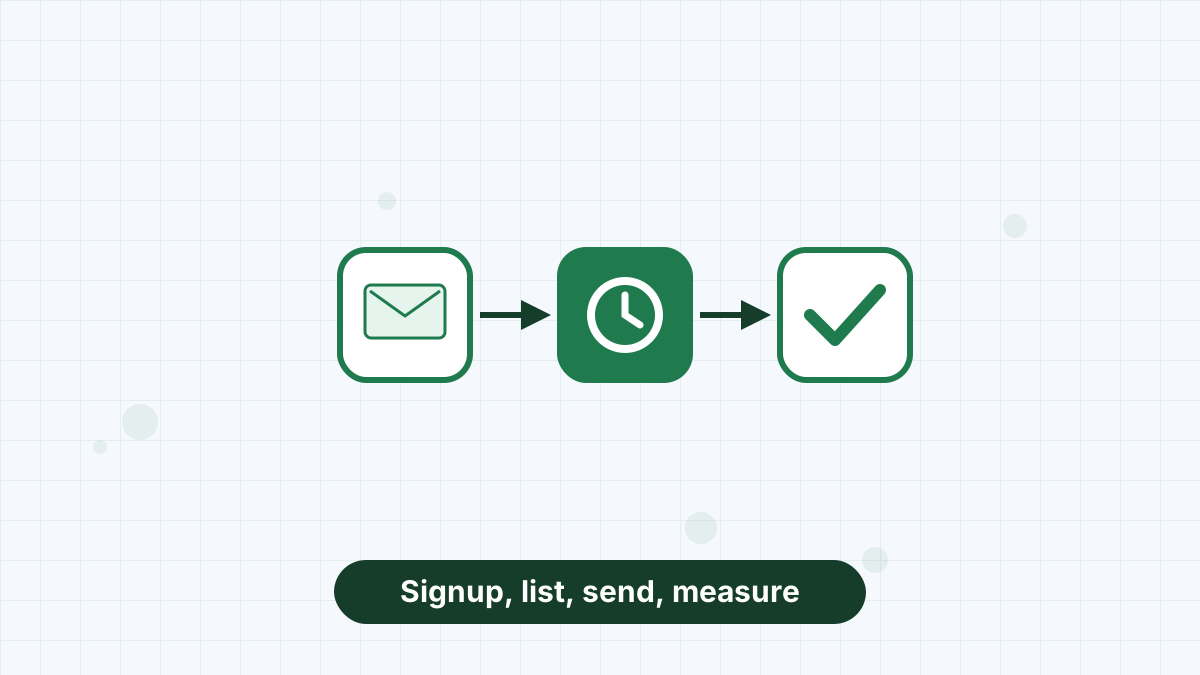
Behind every email program is the same simple cycle:
- Someone subscribes. A visitor fills in a signup form or landing page, usually in exchange for something useful such as a guide or discount.
- They join your list. An email marketing platform stores their address and any details, such as where they signed up.
- Emails go out. Some are automated, such as a welcome sequence; others are broadcasts you write, such as a newsletter.
- You measure and adjust. Reports show who clicked, who unsubscribed and what led to sales, so you can improve the next email.
The platform in the middle, sometimes called an email service provider, handles the technical work: storing your list, sending at scale, managing unsubscribes and reporting results.
The Main Types of Marketing Emails
Most email programs mix a handful of email types, each with a different job:
Sent automatically when someone joins. They deliver what was promised and introduce you.
Regular emails with useful content, updates or stories that keep the relationship going.
Announce a product, offer, launch or event.
A series triggered by an action, such as downloading a guide or buying a product.
Receipts, password resets and shipping notices. Expected, functional and often handled separately.
Our types of marketing emails guide explains when to use each one.
Why Businesses Use Email
The biggest reason is ownership. Social platforms and search engines control who sees your content, and their rules can change overnight. Your email list belongs to you, and you can reach it whenever you choose.
Email is also personal and measurable. You can send different messages to different groups, see exactly what people respond to and improve over time. And it's affordable: many platforms are free for small lists.
That's why email suits businesses of every size, from a local café sending a monthly update to an online course creator running a launch. See email marketing vs social media for how the two channels work together.
What You Need to Get Started
You need surprisingly little:
- An email marketing platform to collect addresses and send emails. Many have free tiers for small lists.
- A reason for people to subscribe, such as a checklist, discount or useful weekly tips.
- A signup form or landing page to collect addresses.
- A sending address on your own domain, verified so your emails reach the inbox.
- A realistic schedule you can keep, such as weekly or every two weeks.
We usually recommend AWeber to people starting out. Its free plan covers up to 500 subscribers and 3,000 sends a month, includes a hosted landing page and an automation for your welcome sequence, and paid plans come with 24/7 support. See our AWeber review.
Ready to try it? AWeber's free plan includes a signup form, landing page and welcome automation.
Try AWeber FreeThe Rules of the Road
Email marketing comes with a few rules, most of which are simply good manners. Only email people who opted in. Include a clear unsubscribe link in every marketing email and honor requests promptly. Show your business's physical mailing address. Don't use misleading subject lines or sender names.
Laws differ by country: CAN-SPAM in the United States, and GDPR and related rules in the UK and EU, for example. Our email marketing laws guide gives an overview, and a qualified adviser can confirm what applies to you.
Common Misconceptions
"Email is dead." People still check email daily, and many prefer hearing from businesses by email over other channels because they control their inbox.
"You need a big list." A small, engaged list often outperforms a large, disengaged one. Start emailing your first subscribers right away.
"Email marketing means spam." Spam is unwanted email. Permission-based email that people asked for is the opposite.
"It's too technical." Modern platforms handle the technical side, with drag-and-drop editors, templates and guided setup.
Key Terms to Know
A few words come up constantly. A subscriber is someone on your list. A broadcast is a one-off email to your list. An automation sends emails on a trigger. A segment is a group of subscribers who share something, such as an interest. Deliverability is whether your emails reach the inbox. Our email marketing terms glossary covers the rest.
Where to Go Next
If you're ready to start, follow our step-by-step email marketing for beginners plan. If you're weighing tools first, read how to choose email marketing software. And if you want to understand the money side, see email marketing cost.
Open a free AWeber account to build a signup form, a welcome sequence and your first newsletter.
What Is Email Marketing FAQs
What is email marketing in simple terms?
Sending emails to people who asked to hear from you, to build a relationship and promote your products or services.
Is email marketing still effective?
Yes. You own your list, emails reach people directly and results are easy to measure.
What's the difference between email marketing and spam?
Permission. Email marketing goes to people who opted in; spam is unsolicited email.
How much does email marketing cost?
You can start free on many platforms. Costs rise with your list size. See our email marketing cost guide.